
Cold Plunge Before or After a Workout?
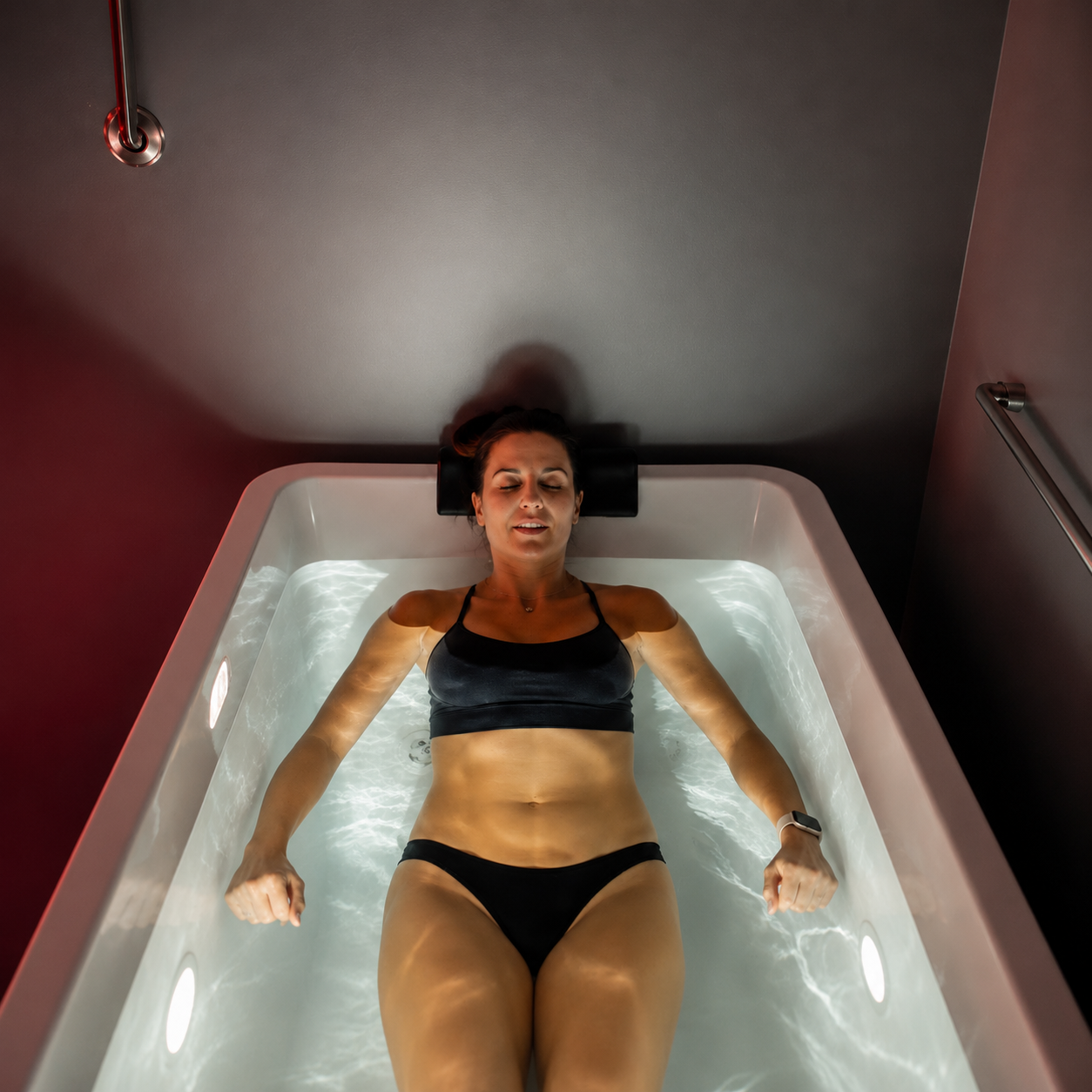
Cold Plunge Before or After a Workout? A Pittsburgh Athlete’s Guide to Timing Cold Therapy
If you train hard, you have probably heard two completely different pieces of advice about cold plunging:
“Get into the cold plunge right after your workout to recover faster.”
And:
“Never cold plunge after training because it can hurt your gains.”
So which one is actually right?
The answer depends on what kind of training you just completed and what you want your body to do next.
For runners, lifters, football players, soccer players, wrestlers, basketball players and other athletes throughout Pittsburgh and the South Hills, learning when to use a cold plunge may be just as important as deciding whether to use one at all.
Here is a practical guide.
The Short Answer: Should You Cold Plunge Before or After a Workout?
There isn't one perfect time for every athlete.
A simple way to think about it is:
After a game, race or demanding conditioning session: Cold plunging may be useful when your priority is feeling recovered and reducing soreness.
Immediately after a muscle-building lifting session: You may want to wait.
During tournament weekends or back-to-back games: Post-competition cold exposure may make more sense because short-term recovery is the priority.
On recovery days: Cold plunging can be incorporated without placing it directly after your strength workout.
The reason for these differences comes down to the distinction between recovery and adaptation.
Training temporarily stresses the body. That stress is part of the signal telling your body to adapt and become stronger.
Cold exposure can reduce some of the discomfort associated with hard training, but immediately suppressing that response isn't necessarily ideal every time—particularly when maximizing muscle growth is your primary goal.
Cold Plunging After Running or Conditioning
For runners and endurance athletes, cold-water immersion is most commonly used to help manage soreness and perceived fatigue after demanding training or competition.
That can make it particularly interesting after:
-
Long runs
-
Hill workouts
-
Speed sessions
-
Hard conditioning
-
Races
-
Multiple games or events in a short period
-
High-volume practices
Research has found that cold-water immersion can improve some measures of perceived recovery and muscle soreness following strenuous exercise.
That doesn't necessarily mean you need to cold plunge after every run.
If you completed an easy three-mile recovery run and feel great, there may be little reason to aggressively chase additional recovery.
After a race, tournament or unusually difficult training session, the calculation changes.
Ask yourself: Do I need maximum training adaptation from today, or do I need to feel ready to perform again soon?
For many competitive athletes, the answer changes throughout the season.
Should You Cold Plunge After Lifting Weights?
This is where cold-plunge timing becomes more important.
If your primary goal is building muscle, routinely jumping into a cold plunge immediately after resistance training may not be the best strategy.
A systematic review and meta-analysis found evidence suggesting that cold-water immersion performed immediately after resistance training may modestly attenuate muscle hypertrophy over time.
That doesn't mean lifters have to avoid cold plunges.
It means you should be more intentional about when you use them.
Instead of finishing your last set and immediately getting into cold water, consider separating your strength workout from your cold-plunge session.
For example:
Morning lifting → cold plunge later in the day
or
Strength day → cold plunge on a recovery/cardio day
This allows cold exposure to remain part of your recovery routine without automatically pairing it with every resistance-training session.
What About Football, Soccer, Basketball and Wrestling?
Team-sport athletes have a different problem than someone simply trying to gain muscle in the gym.
You may have another practice tomorrow.
Or another game in 24–48 hours.
A soccer player during a tournament weekend, football player after a Friday-night game or basketball player during a multi-game stretch may value being ready for the next performance more than maximizing every possible training adaptation from the previous one.
That's where cold-water immersion can potentially be useful.
Athletes frequently use cold exposure after demanding competitions because reducing perceived soreness may make the next day of activity feel more manageable.
The key distinction is:
Training days
The goal is often to create adaptation.
Competition and tournament days
The goal is often to recover quickly enough to perform again.
Those aren't always the same thing.
Should High-School Athletes Cold Plunge?
Parents and coaches often see professional athletes using ice baths and assume younger athletes should follow the same routine.
The research isn't quite that straightforward.
There is considerably less research involving adolescents than adults. A systematic review examining cold recovery strategies in adolescent athletes found that the strongest evidence was for improvements in subjective feelings of soreness, while evidence for improvements in physiological recovery and performance was much less convincing.
So cold plunging shouldn't be treated as a requirement for young athletes or as a replacement for the fundamentals.
For high-school athletes, recovery still starts with:
-
Adequate sleep
-
Hydration
-
Enough calories
-
Protein and overall nutrition
-
Proper training load
-
Rest days
-
Injury evaluation when appropriate
Cold-water immersion is better thought of as an optional recovery tool, not a shortcut around those fundamentals.
Parents of younger athletes should also involve the athlete's parent or guardian, coach, athletic trainer or healthcare professional when deciding whether cold exposure is appropriate.
Should You Cold Plunge Before a Workout?
This is another increasingly common question.
Cold exposure can feel extremely stimulating, which is why some people like to plunge earlier in the day before training.
However, getting very cold immediately before explosive or maximal exercise isn't necessarily ideal.
Your muscles generally perform differently when thoroughly warmed up than when you've just cooled your body down.
If you enjoy cold exposure before training, give yourself adequate time afterward to naturally warm back up and complete your normal sport-specific warmup.
Think of the plunge as something separate from your physical warmup—not a replacement for it.
What About Cold Plunging on Rest Days?
For many recreational athletes, this may actually be one of the simplest ways to incorporate cold plunging.
Using cold exposure on a recovery day means you're not constantly trying to decide whether you're interfering with a lifting session.
For example:
Monday: Strength training
Tuesday: Recovery + cold plunge
Wednesday: Strength training
Thursday: Running/conditioning
Friday: Strength training
Saturday: Cold plunge or contrast recovery
Sunday: Rest
Your exact schedule will obviously depend on your sport and training program.
The larger point is that more cold isn't automatically better.
Use recovery strategically.
Cold Plunge After a Game vs. After Practice
Here's another useful distinction for competitive athletes.
Imagine a football player finishes a hard strength workout in June.
The purpose of that workout is partly to create an adaptation that makes the athlete stronger.
Now imagine that same player finishes a game in October and has another physically demanding week of practice approaching.
The priorities are different.
After competition, an athlete may care much more about reducing soreness and feeling recovered.
This is why asking simply:
“Are cold plunges good for athletes?”
isn't nearly as useful as asking:
“What am I trying to accomplish with this particular plunge?”
How Cold Does a Cold Plunge Need to Be?
Colder isn't automatically better.
The Cleveland Clinic recommends that beginners generally start around 50–59°F and cautions against temperatures below 40°F. It also recommends keeping sessions brief, particularly for beginners.
There is no prize for enduring the coldest temperature possible.
A controlled commercial plunge also has an advantage over filling a bathtub with random amounts of ice: the temperature is known and repeatable.
That makes it much easier to create a consistent routine.
What About Sauna + Cold Plunge?
Alternating heat and cold is commonly known as contrast therapy.
Instead of thinking only about surviving a few minutes of cold, contrast sessions combine heat exposure with intentional cold exposure as part of a larger recovery experience.
For athletes who enjoy both sauna and cold plunging, this can provide a structured way to decompress physically and mentally after demanding training.
At Float G.O.A.T.S. in Bridgeville, our contrast rooms combine an infrared sauna and commercial cold plunge in a private recovery suite, allowing athletes to control their own experience without recovering in a crowded communal space.
So Who Benefits Most From a Post-Workout Cold Plunge?
Cold plunging may make the most sense when your immediate goal is:
-
Managing soreness after unusually difficult training
-
Recovering after a race
-
Recovering between games
-
Getting through tournament weekends
-
Managing demanding periods of conditioning
-
Feeling refreshed after a hard athletic week
-
Creating a dedicated recovery routine
You may want to be more strategic with timing when:
-
Your primary goal is maximizing muscle growth
-
You just completed resistance training
-
You're using cold after every single workout regardless of training load
-
You're treating cold exposure as a substitute for sleep, nutrition or rest
Recovery Should Match the Training
Pittsburgh athletes train for completely different things.
A Mt. Lebanon runner preparing for a 10K has different recovery demands than a Peters Township football player.
A South Fayette wrestler cutting through a demanding competition season has different needs than someone lifting at a South Hills gym primarily to build muscle.
A basketball player during tournament season has different priorities than an athlete during an off-season strength block.
Your recovery strategy should reflect those differences.
That's why the best answer to “When should I cold plunge?” is:
Use cold when recovery is the priority. Be more cautious about immediately using it when training adaptation—particularly muscle growth—is the priority.
Cold Plunge & Athlete Recovery in Pittsburgh's South Hills
Float G.O.A.T.S. Recovery Club is located at 1155 Washington Pike in Bridgeville, PA, convenient to athletes and families throughout Bridgeville, Upper St. Clair, Mt. Lebanon, South Fayette, Peters Township, Bethel Park, Canonsburg and the surrounding South Hills.
Our recovery club offers:
-
Cold plunge
-
Private contrast therapy with infrared sauna + cold plunge
-
Float therapy
-
Infrared sauna
-
Red light therapy
-
Massage chairs
You don't need to be a professional athlete to take recovery seriously.
Whether you're preparing for your next race, working through a difficult training block, competing on the weekend or simply tired of feeling sore after every workout, the goal is the same:
Train hard enough to improve—and recover well enough to do it again.
Ready to Try a Cold Plunge in Pittsburgh?
Book a cold plunge or private contrast therapy session at Float G.O.A.T.S. Recovery Club in Bridgeville and experience a more intentional approach to recovery.
Float G.O.A.T.S. Recovery Club
1155 Washington Pike, Unit 15
Bridgeville, PA 15017
412-914-8160
Cold plunging and contrast therapy are wellness services and are not intended to diagnose, treat or cure injuries or medical conditions. Athletes with cardiovascular conditions, medical concerns or recent injuries should discuss cold-water immersion with an appropriate healthcare professional before use.