
Sauna or Cold Plunge First? A Pittsburgh Guide to Contrast Therapy
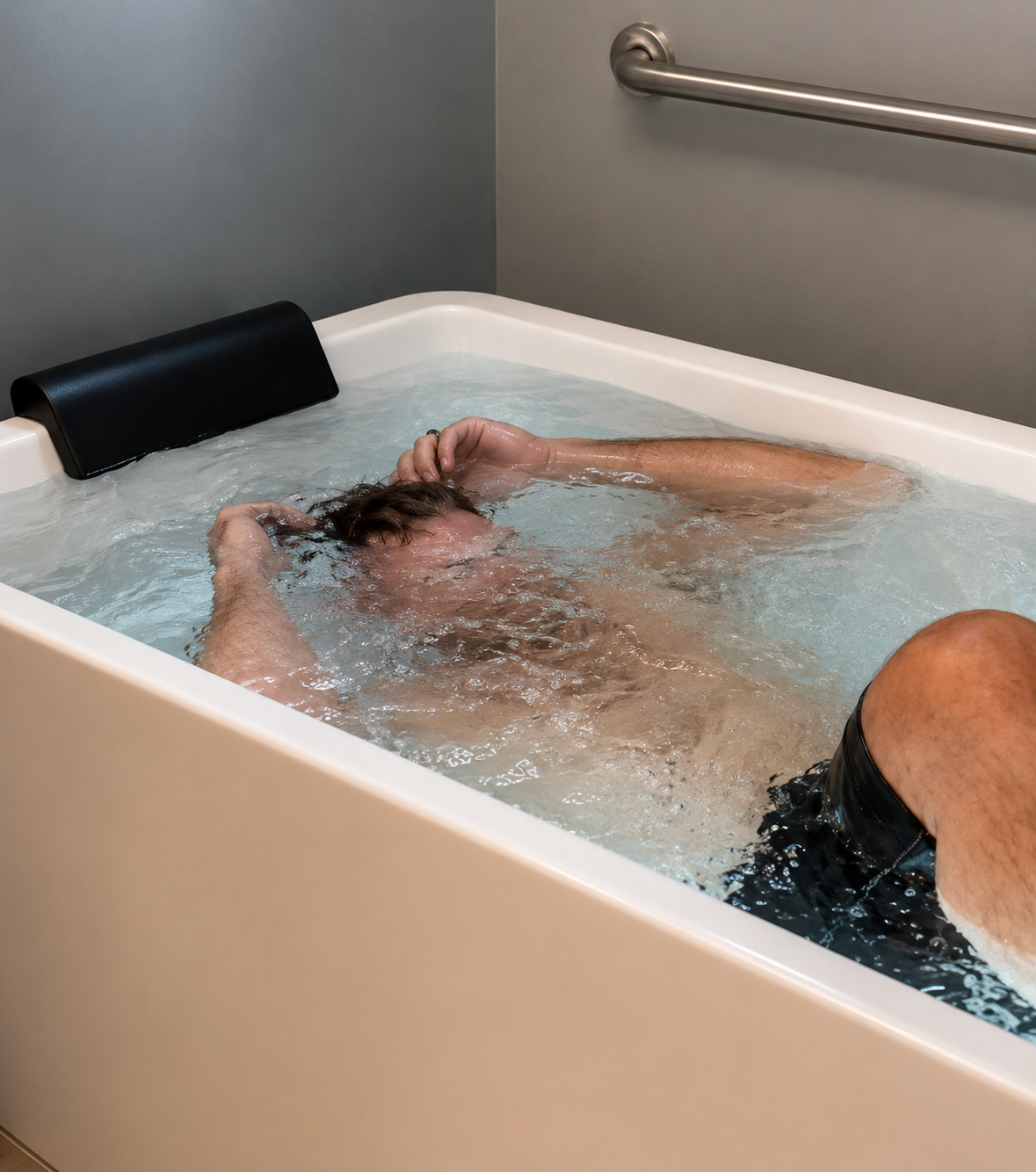
Sauna or Cold Plunge First? A Pittsburgh Guide to Contrast Therapy
If you are new to contrast therapy, one of the first questions you will probably ask is surprisingly simple:
Should I sauna or cold plunge first?
Closely followed by:
-
How long should I stay in each?
-
How many rounds should I do?
-
Should I finish hot or cold?
-
Is contrast therapy better before or after a workout?
With infrared saunas and cold plunges becoming increasingly popular around Pittsburgh, there is no shortage of routines online. The problem is that many of them make one specific protocol sound like the only "correct" way to do contrast therapy.
It isn't that simple.
The best sauna-and-cold-plunge routine depends on why you are doing it in the first place.
At Float G.O.A.T.S. Recovery Club in Bridgeville, we think the easiest way to approach contrast therapy is to start with your goal.
What Is Contrast Therapy?
Contrast therapy involves alternating between heat and cold exposure.
At Float G.O.A.T.S., that means moving between a private infrared sauna and cold plunge during the same recovery session.
You might also hear it called:
-
hot and cold therapy
-
sauna and cold plunge therapy
-
contrast bathing
-
hot/cold immersion
-
thermal contrast therapy
The concept is simple: expose the body to heat, transition to cold, and repeat if desired.
What you do with that basic framework can vary considerably.
So, Should You Sauna or Cold Plunge First?
For most people looking for a traditional contrast experience, starting with the sauna is the simplest place to begin.
Heat gives you time to settle into the session before transitioning into the cold.
A beginner-friendly sequence might look like:
Infrared sauna → cold plunge → rest or rewarm
If you are doing a longer session, you can alternate again based on your comfort level.
But starting hot is not a rule.
Some athletes prefer cold first when they want to feel alert before training. Others separate their cold exposure from strength training altogether.
That is why the better question is:
What are you trying to get out of the session?
If Your Goal Is General Recovery
If you trained hard, competed recently or simply feel physically worn down, a sauna-first contrast session is a reasonable starting point.
One simple approach is:
-
Spend time in the infrared sauna.
-
Transition into the cold plunge.
-
Allow yourself to recover between rounds if needed.
-
Repeat only if you feel comfortable.
Research into water-based recovery methods suggests that cold-water immersion and contrast therapy may help with some measures of post-exercise recovery and muscle soreness, although results vary based on the athlete, temperature, duration and type of exercise.
Translation:
More extreme is not automatically better.
You do not need to turn recovery into another competition.
How Long Should You Sauna Before a Cold Plunge?
There is no universally perfect sauna duration.
For a first contrast session, the goal should be getting comfortably warm rather than seeing how long you can tolerate the heat.
At Float G.O.A.T.S., our infrared sauna and cold plunge are located together in a private contrast room, so you can transition from one to the other without moving through a crowded communal facility.
Beginners should generally start conservatively and pay attention to how they feel.
If you become lightheaded, nauseated, unusually weak or otherwise unwell, get out rather than trying to finish a predetermined time.
How Long Should You Stay in a Cold Plunge?
This is another area where the internet tends to reward extremes.
You may see people online staying in very cold water for long periods of time.
That does not mean you should copy them.
Cold-water research uses a wide range of temperatures and immersion times, and the ideal dose depends partly on water temperature and the goal of the session.
If you are new to cold plunging, your first objective is simply learning to control your breathing and tolerate the cold safely.
You do not need a heroic plunge to have a worthwhile session.
At Float G.O.A.T.S., our commercial cold plunge provides controlled, consistent water temperature so you know what you are stepping into each visit.
Should You End Contrast Therapy With Hot or Cold?
This may be the most debated question of all.
And the answer is:
It depends on what you want to feel like afterward.
Finishing cold
Some people prefer ending with the cold plunge because they enjoy feeling:
-
awake
-
refreshed
-
energized
-
mentally sharp
If you are doing contrast therapy earlier in the day or want to leave feeling invigorated, ending cold may appeal to you.
Finishing warm
Other people prefer returning to heat or allowing themselves to warm naturally after their final plunge.
If your goal is relaxation and you dislike leaving the session feeling cold, that may feel better.
There isn't strong evidence showing that everyone must end a contrast session on one particular temperature to "make it work."
Your goal and your response to the session matter more than following an internet rule.
Is Sauna and Cold Plunge Good After a Workout?
It can be—but the type of workout matters.
If your immediate priority is feeling recovered for another practice, game, race or competition, cold-water immersion may be useful in some situations.
Research has found potential benefits for post-exercise soreness and some recovery measures, particularly when rapid recovery is important.
However, there is an important distinction for people focused heavily on building muscle and strength.
Regular cold-water immersion immediately after resistance training may not always align with maximizing training adaptations.
That doesn't mean strength athletes need to avoid cold plunging.
It means timing matters.
If your primary goal is muscle growth, you may choose to separate your cold plunge from your lifting session rather than automatically getting into cold water the second your workout ends.
We explain this more fully in our guide:
Cold Plunge Before or After a Workout?
What About Pittsburgh High School and Competitive Athletes?
Recovery priorities change during a competitive season.
Imagine two athletes:
One is in an offseason strength program trying to build as much strength and muscle as possible.
The other just played a Friday night football game and needs to feel ready again quickly.
Those athletes may make different recovery choices.
For athletes competing in football, soccer, basketball, wrestling, swimming, track, hockey or other sports around Pittsburgh, recovery decisions should take into account:
-
when the next practice occurs
-
whether another competition is coming soon
-
current soreness and fatigue
-
training goals
-
injury status
-
recommendations from coaches, athletic trainers or healthcare professionals
Recovery should support the training plan—not automatically follow the latest social-media routine.
Is Contrast Therapy Better Than Just a Cold Plunge?
Not necessarily.
They are different experiences.
Cold plunge alone may make sense when:
-
you have limited time
-
cold exposure is your primary goal
-
you enjoy the alert feeling afterward
-
you are using cold strategically around athletic recovery
Contrast therapy may make sense when:
-
you enjoy both heat and cold
-
you want a longer recovery experience
-
you prefer warming up before entering cold water
-
you want sauna and cold plunge access in the same private session
And sometimes you may simply want an infrared sauna without any cold exposure at all.
There does not have to be one "best" recovery modality for every person and every day.
What Does a Beginner Contrast Therapy Session Look Like?
If this is your first time, keep it simple.
A beginner session does not need five rounds or an extreme temperature challenge.
Think:
Warm up → cool down → assess how you feel.
Once you understand how your body responds to heat and cold, you can decide whether you prefer additional transitions.
The goal is to leave feeling like you recovered—not like you survived something.
Who Should Be Careful With Sauna and Cold Plunge Therapy?
Heat and cold both create physiological stress.
People with certain cardiovascular conditions, blood-pressure concerns, problems regulating body temperature, pregnancy or other medical conditions may need individualized guidance before using extreme heat or cold.
If you have a medical condition or have been advised to limit heat or cold exposure, speak with your healthcare professional before starting.
And regardless of health status:
More time and more extreme temperatures do not automatically mean better results.
Where Can I Try Sauna and Cold Plunge Contrast Therapy Near Pittsburgh?
Float G.O.A.T.S. Recovery Club offers private contrast therapy in Bridgeville, PA, convenient to Pittsburgh's South Hills.
Our recovery club serves guests from areas including:
-
Bridgeville
-
South Fayette
-
Upper St. Clair
-
Mt. Lebanon
-
Peters Township
-
Bethel Park
-
Carnegie
-
Canonsburg
-
Collier Township
-
and surrounding Pittsburgh communities
Our private contrast rooms combine a Sunlighten or Clearlight infrared sauna with a commercial Plunge cold plunge, so there is no need to move between different rooms or share a communal recovery space.
Frequently Asked Questions About Sauna and Cold Plunge Therapy
Should I cold plunge or sauna first?
For a traditional contrast session, many people find it easiest to begin with heat and transition into cold. However, the best order depends on your goal, comfort level and workout schedule.
Can I sauna and cold plunge on the same day?
For many healthy adults, sauna and cold plunge are commonly combined in the same contrast session. People with medical conditions or concerns about heat or cold exposure should seek individualized medical guidance.
Should I shower between sauna and cold plunge?
Follow the hygiene procedures of the facility you are visiting. At a professional recovery center, keeping sauna and plunge equipment clean and properly maintained is an important part of the experience.
Do I have to alternate more than once?
No. Your first session can be as simple as heat followed by cold. Multiple rounds are optional.
Is contrast therapy good for sore muscles?
Research suggests cold-water immersion and contrast water therapy may help some aspects of post-exercise recovery and soreness, but results vary and neither should be viewed as a cure for an injury.
Should I cold plunge immediately after lifting weights?
If maximizing muscle and strength adaptation is your primary goal, you may want to be more strategic about immediately using cold-water immersion after resistance training. If rapid recovery between competitions is the priority, the calculation may be different.
Is contrast therapy only for athletes?
Not at all. Many people use sauna and cold plunge sessions simply because they enjoy the combination of warmth, cold and dedicated recovery time.
The Bottom Line
So, sauna or cold plunge first?
For someone trying contrast therapy for the first time, sauna first and cold second is an easy place to start.
But there is no magic sequence that every person needs to follow.
The better approach is to decide what you want from your session:
Recovery? Relaxation? Alertness? Athletic performance? A dedicated break from your day?
Then build the experience around that goal.
If you're looking for sauna and cold plunge contrast therapy near Pittsburgh, Float G.O.A.T.S. offers private recovery sessions at our Bridgeville location in Pittsburgh's South Hills.
Float G.O.A.T.S. Recovery Club
1155 Washington Pike, Unit 15
Bridgeville, PA 15017
412-914-8160
Float. Sweat. Plunge. Recover.